
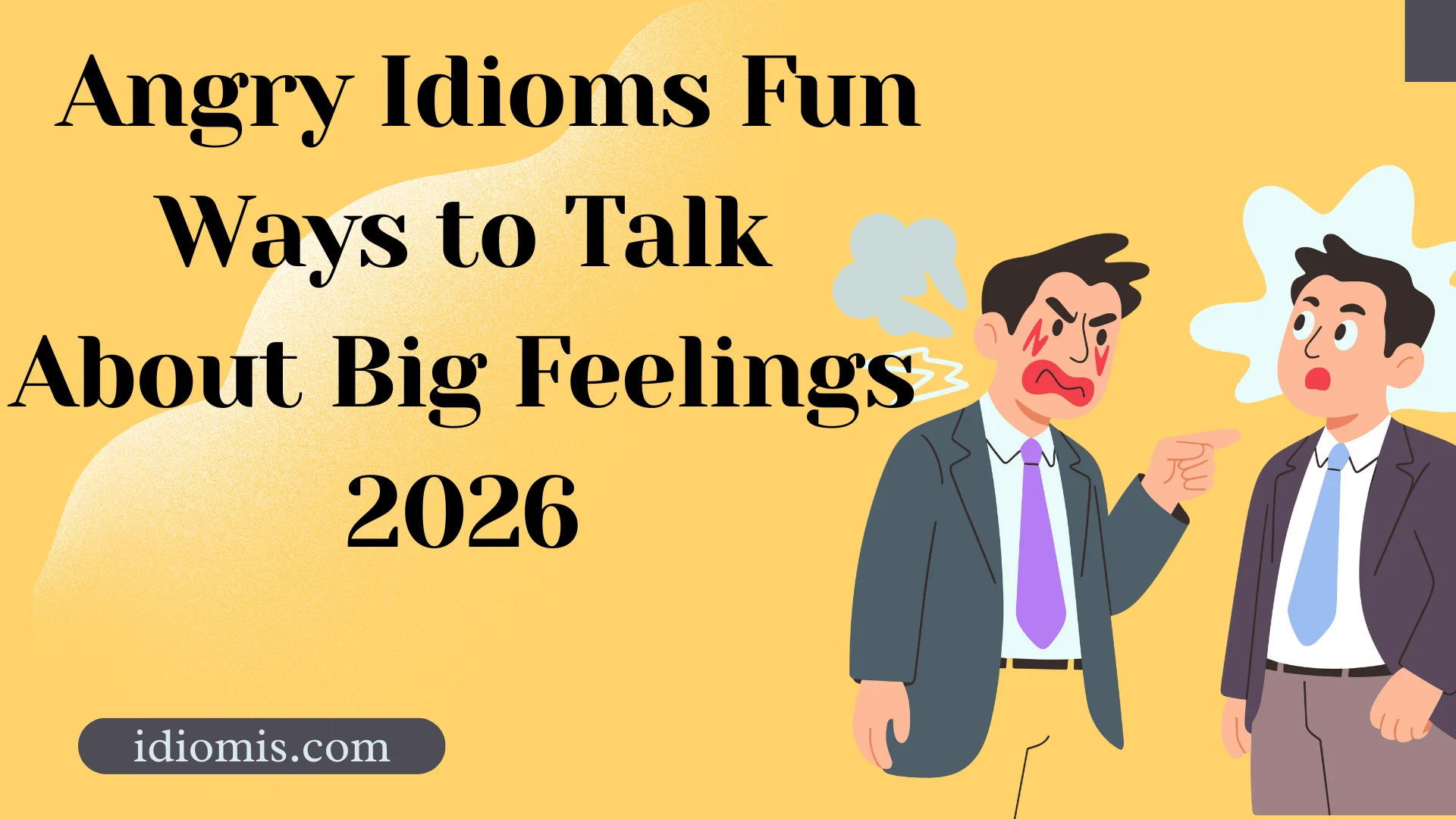
Everyone feels angry sometimes—even kids! Feeling upset, frustrated, or mad is a normal part of life. But explaining these big feelings in words can be tricky. That’s where angry idioms come in! Angry idioms are fun and creative expressions that help describe feelings of anger without sounding rude or scary. Instead of saying “I am very angry,” idioms let us paint a picture with words.
English has many playful idioms that talk about anger in a colorful and imaginative way. These expressions don’t mean exactly what the words say, but they help people understand emotions quickly and clearly. Kids often hear angry idioms in cartoons, storybooks, movies, and everyday conversations, which makes learning them very useful. Once children understand these expressions, they can better understand stories, jokes, and real-life conversations.
Learning angry idioms also helps kids talk about their feelings in a healthy way. Instead of shouting or getting upset, children can use words to explain how they feel. Idioms make emotional language sound softer, smarter, and sometimes even funny. This helps kids communicate better with friends, teachers, and family members.
This guide to angry idioms is designed especially for kids. The meanings are simple, the examples are friendly, and the language is easy to understand. Learning these expressions helps children grow emotionally and improves their English skills at the same time. With angry idioms, big feelings become easier—and more fun—to talk about.
⭐ 1. Number & Power Angry Idioms
These idioms use numbers or strength to show big emotions.
1. At the End of My Rope
Meaning: Feeling very frustrated and tired of a problem.
I was at the end of my rope after trying the puzzle all day.
She felt this way when nothing worked.
2. Ten Feet Tall and Angry
Meaning: Feeling super strong with anger.
He felt ten feet tall and angry after being teased.
She stood up proudly even though she was upset.
3. One Too Many
Meaning: The last thing that causes anger.
That loud noise was one too many for him.
Spilling the juice was one too many problems today.
4. Count to Ten
Meaning: Calm down before reacting.
Mom told me to count to ten when I got mad.
He counted slowly and felt better.
5. Blow a Fuse
Meaning: Get very angry suddenly.
He blew a fuse when the computer froze.
She almost blew a fuse over the mess.
6. All Wound Up
Meaning: Feeling tense or upset.
She was all wound up before the test.
He was all wound up from waiting too long.
7. Zero Patience
Meaning: Feeling very annoyed.
I had zero patience standing in line.
She showed zero patience during the game.
8. Two Seconds from Snapping
Meaning: Almost losing control.
He was two seconds from snapping.
She took a deep breath instead.
9. Make a Mountain Out of a Molehill
Meaning: Making a small problem seem big.
Don’t make a mountain out of a molehill.
It was just a tiny mistake.
10. Number One Complaint
Meaning: The main reason for anger.
Noise was her number one complaint.
Being late was his number one complaint.
⭐ 2. Animal Angry Idioms
These idioms use animals to describe angry behavior.
1. Mad as a Hornet
Meaning: Very angry.
He was mad as a hornet after losing the game.
She stomped away angrily.
2. Grumpy Bear
Meaning: Acting cranky or annoyed.
He was a grumpy bear before breakfast.
She became cheerful later.
3. Snapping Turtle
Meaning: Someone who gets annoyed easily.
He acted like a snapping turtle today.
It’s best to give him space.
4. Bull in a China Shop
Meaning: Angry and careless.
He rushed in like a bull in a china shop.
Things broke because he wasn’t careful.
5. Roaring Mad
Meaning: Extremely angry.
She was roaring mad about the unfair rule.
Everyone could tell.
6. Snarl
Meaning: Speak in an angry way.
He snarled his reply.
She chose kind words instead.
7. Angry as a Wet Hen
Meaning: Loud and upset.
She was angry as a wet hen in the hallway.
Her voice echoed!
8. Barking Mad
Meaning: Acting wildly angry.
He was barking mad about the score.
Later, he laughed it off.
9. The Lion’s Roar
Meaning: A big show of anger.
His shout felt like a lion’s roar.
The room went quiet.
10. Cat Got Your Tongue
Meaning: Too upset to speak.
She was so mad, she said nothing.
It was like the cat got her tongue.
⭐ 3. Everyday Angry Idioms
These idioms are commonly used in daily conversations.
1. Lose Your Cool
Meaning: Get angry.
He lost his cool during the game.
She stayed calm instead.
2. Hit the Roof
Meaning: Get extremely angry.
Dad hit the roof when he saw the mess.
He calmed down later.
3. See Red
Meaning: Suddenly feel very angry.
She saw red when teased.
He walked away calmly.
4. Steam Coming Out of Ears
Meaning: Very angry.
He looked like steam was coming out of his ears.
Everyone noticed his mood.
5. Get on My Nerves
Meaning: Annoy me.
The loud tapping got on my nerves.
She asked for quiet.
6. Fly Off the Handle
Meaning: Get angry quickly.
He flew off the handle over nothing.
Breathing helped him relax.
7. In a Bad Mood
Meaning: Feeling grumpy.
She woke up in a bad mood.
A smile helped fix it.
8. Grind My Gears
Meaning: Make someone angry.
That noise grinds my gears.
He turned it off.
9. Hot Under the Collar
Meaning: Feeling angry.
He felt hot under the collar during class.
She stayed quiet.
10. Lose Your Temper
Meaning: Stop controlling anger.
He lost his temper briefly.
Then he apologized.
⭐ 4. Food & Heat Angry Idioms
These idioms use food and heat to explain anger.
1. Hot-Headed
Meaning: Gets angry easily.
He is hot-headed but kind.
She helps him stay calm.
2. Boiling Mad
Meaning: Extremely angry.
She was boiling mad about cheating.
She waited to cool down.
3. Burned Up
Meaning: Very upset.
He was burned up by the unfair rule.
She felt the same way.
4. In a Stew
Meaning: Worried and upset.
She was in a stew all afternoon.
Talking helped her relax.
5. Sour Face
Meaning: Looking angry.
He had a sour face all morning.
A joke changed it.
6. Peppery Temper
Meaning: Quick to get angry.
He has a peppery temper.
He’s learning patience.
7. Steaming Hot
Meaning: Full of anger.
She felt steaming hot inside.
A walk helped calm her.
8. Cool Off
Meaning: Calm down.
He needed time to cool off.
She gave him space.
9. Add Fuel to the Fire
Meaning: Make anger worse.
Laughing added fuel to the fire.
Staying quiet helped instead.
10. Spicy Mood
Meaning: Feeling grumpy.
He was in a spicy mood today.
A snack helped!
⭐ 5. School & Friendship Angry Idioms
These angry idioms are commonly used when kids feel upset with friends, classmates, or situations at school.
1. Left Out in the Cold
Meaning: Feeling ignored or excluded.
He felt left out in the cold when no one chose his team.
She felt better when her friend invited her to sit together.
2. Push Someone’s Buttons
Meaning: Do or say something that makes someone angry.
Teasing really pushed his buttons.
She asked her brother to stop pushing her buttons.
3. Give Someone the Silent Treatment
Meaning: Ignore someone because you’re upset.
She gave her friend the silent treatment all morning.
Later, they talked and fixed things.
4. Rub Someone the Wrong Way
Meaning: Annoy someone without meaning to.
That comment rubbed her the wrong way.
He apologized when he noticed she was upset.
5. Take It Personally
Meaning: Feel hurt or angry about a comment.
He took the joke personally.
She learned it wasn’t meant to be mean.
6. Get the Cold Shoulder
Meaning: Be ignored by others.
He got the cold shoulder after the argument.
Things felt better once they talked.
7. Storm Off
Meaning: Leave angrily.
She stormed off after losing the game.
After calming down, she came back.
8. Hold a Grudge
Meaning: Stay angry for a long time.
He held a grudge over a small fight.
Letting go helped him feel happier.
9. Bite Someone’s Head Off
Meaning: Reply in a very angry way.
She bit his head off when stressed.
She said sorry soon after.
10. Clear the Air
Meaning: Talk to fix bad feelings.
They cleared the air after the misunderstanding.
Everyone felt better after ward.
⭐ 6. Big Feeling & Reactions Angry Idioms
These idioms help kids describe strong angry feelings and reactions in a clear and playful way.
1. Blow Your Top
Meaning: Get extremely angry.
He blew his top when the rules changed.
She took a breath instead of yelling.
2. See Red
Meaning: Feel sudden anger.
He saw red when someone grabbed his book.
She walked away to calm down.
3. Lose It
Meaning: Stop controlling your emotions.
He almost lost it during the argument.
Talking calmly helped him relax.
4. Hit the Roof
Meaning: Become very angry.
Dad hit the roof when he saw the mess.
He later explained the rules calmly.
5. Flip Your Lid
Meaning: Get mad very fast.
She flipped her lid over the broken toy.
A hug helped her feel better.
6. Bottle It Up
Meaning: Keep angry feelings inside.
He bottled it up all day at school.
Sharing helped him feel lighter.
7. Fly Into a Rage
Meaning: Suddenly become very angry.
He flew into a rage during the game.
Cooling down helped him think clearly.
8. Boil Over
Meaning: Anger finally bursts out.
Her anger boiled over after the teasing.
She talked to the teacher for help.
9. Lose Your Cool
Meaning: Stop being calm.
He lost his cool during the test.
Deep breaths helped him focus again.
10. Calm Down
Meaning: Return to a peaceful mood.
She calmed down after a short walk.
Talking it out made things better.
⭐ 7. Body & Face Angry Idioms
These idioms describe anger using body language and facial expressions.
1. Cross Your Arms
Meaning: Show anger or stubbornness.
He crossed his arms when upset.
She relaxed once she understood.
2. Turn Red in the Face
Meaning: Get very angry or embarrassed.
He turned red in the face during the argument.
She took a breath and calmed down.
3. Frown Upon
Meaning: Disapprove of something.
The teacher frowned upon shouting.
Quiet voices worked better.
4. Stomp Your Feet
Meaning: Show anger by moving loudly.
He stomped his feet when frustrated.
Talking helped instead.
5. Clench Your Fists
Meaning: Hold hands tight because of anger.
She clenched her fists in frustration.
She then let go and relaxed.
6. Grit Your Teeth
Meaning: Try to stay calm while angry.
He gritted his teeth and waited.
Patience paid off.
7. Give a Dirty Look
Meaning: Show anger with your eyes.
She gave a dirty look after the tease.
A smile fixed it later.
8. Pout
Meaning: Show unhappiness silently.
He pouted when plans changed.
He felt better after talking.
9. Furrow Your Brow
Meaning: Look worried or angry.
She furrowed her brow at the problem.
She solved it soon after.
10. Tears of Frustration
Meaning: Cry because of anger or stress.
He had tears of frustration.
A break helped him feel okay.
⭐ 8. Heat & Weather Angry Idioms
These idioms use heat and weather to explain anger.
1. Hot-Tempered
Meaning: Gets angry easily.
He is hot-tempered but caring.
He’s learning to pause.
2. Storm Brewing
Meaning: Anger is about to start.
A storm was brewing in the room.
Everyone stayed calm.
3. Thundercloud Mood
Meaning: Very angry mood.
She had a thundercloud mood.
Sunshine returned later!
4. Rain on Someone’s Parade
Meaning: Ruin someone’s happiness.
Yelling rained on the parade.
Apologies fixed it.
5. Blow Hot and Cold
Meaning: Change moods quickly.
He blew hot and cold all day.
Rest helped him settle.
6. Heat Up
Meaning: Become tense or angry.
The game heated up fast.
Rules kept peace.
7. Cool Breeze
Meaning: Calm feeling after anger.
A talk brought a cool breeze.
Everyone smiled again.
8. Storm Out
Meaning: Leave angrily.
She stormed out of the room.
She came back calm.
9. Cloud Your Judgment
Meaning: Anger affects decisions.
Anger clouded his judgment.
Waiting helped.
10. Clear Skies Ahead
Meaning: Problems are over.
After talking, clear skies were ahead.
They moved on happily.
⭐ 9. Words & Talking Angry Idioms
These idioms show anger through speech.
1. Bite Your Tongue
Meaning: Stop yourself from saying something angry.
He bit his tongue.
That avoided trouble.
2. Raise Your Voice
Meaning: Speak loudly in anger.
She raised her voice briefly.
Then she lowered it.
3. Snap Back
Meaning: Answer angrily.
He snapped back without meaning to.
He apologized.
4. Harsh Words
Meaning: Mean things said in anger.
Harsh words hurt feelings.
Kind words heal.
5. Talk Back
Meaning: Respond rudely.
Talking back caused trouble.
Listening worked better.
6. Mouth Off
Meaning: Speak angrily or disrespectfully.
He mouthed off in anger.
He learned to pause.
7. Say Something You Regret
Meaning: Speak before thinking.
She said something she regretted.
Saying sorry helped.
8. Call Names
Meaning: Use mean words.
Calling names isn’t kind.
Talking calmly is better.
9. Raise a Fuss
Meaning: Complain loudly.
He raised a fuss over turns.
They shared instead.
10. Speak Your Mind
Meaning: Say feelings respectfully.
She spoke her mind calmly.
Everyone listened.
⭐ 10. Fixing Anger & Feeling Better Idioms
These idioms help kids talk about calming down and solving problems.
1. Take a Deep Breath
Meaning: Calm yourself.
He took a deep breath.
It helped right away.
2. Let It Go
Meaning: Stop being angry.
She let it go.
That felt good.
3. Make Peace
Meaning: Become friendly again.
They made peace after arguing.
Smiles returned.
4. Turn Over a New Leaf
Meaning: Start behaving better.
He turned over a new leaf.
Great choices followed.
5. Mend Fences
Meaning: Fix a relationship.
They mended fences with a talk.
Friendship grew stronger.
6. Clear the Air
Meaning: Talk to fix problems.
They cleared the air.
Everyone felt lighter.
7. Patch Things Up
Meaning: End a conflict.
They patched things up.
Playtime resumed.
8. Shake It Off
Meaning: Don’t let anger last.
He shook it off.
He kept playing.
9. Start Fresh
Meaning: Begin again kindly.
They started fresh the next day.
It worked well.
10. Peace and Quiet
Meaning: A calm feeling.
Peace and quiet filled the room.
Anger was gone.
⭐ 11. Game & Competition Angry Idioms
These idioms are often used when kids feel angry during games, sports, or contests.
1. Sore Loser
Meaning: Someone who gets angry after losing.
He was a sore loser after the game.
He felt better once he tried again.
2. Play Rough
Meaning: Act too aggressively.
Playing rough made others upset.
Gentle play worked better.
3. Cry Foul
Meaning: Complain loudly about unfairness.
He cried foul during the race.
Rules were explained calmly.
4. Lose the Game Face
Meaning: Stop staying calm in a game.
She lost her game face.
A break helped her reset.
5. Get Benched
Meaning: Be removed for bad behavior.
He got benched for yelling.
He learned to stay calm.
6. Break the Rules
Meaning: Ignore rules when angry.
Anger led him to break the rules.
He apologized after.
7. Play to Win
Meaning: Try too hard and get upset.
Playing to win made him angry.
Fun mattered more.
8. Throw a Fit
Meaning: Have an angry outburst.
She threw a fit after losing.
Counting helped her calm down.
9. Call Time-Out
Meaning: Take a break to cool down.
They called time-out.
Everyone relaxed.
10. Shake Hands
Meaning: Make peace after a game.
They shook hands after arguing.
Respect won.
⭐ 12. Family & Home Angry Idioms
These idioms are often heard at home with family members.
1. Get on Someone’s Nerves
Meaning: Annoy someone a lot.
The noise got on his nerves.
Quiet time helped.
2. Lay Down the Law
Meaning: Set strict rules.
Mom laid down the law.
Everyone listened.
3. Blow Up
Meaning: Suddenly get angry.
Dad blew up for a moment.
Then he calmed down.
4. In Hot Water
Meaning: In trouble.
He was in hot water after yelling.
Saying sorry helped.
5. On Thin Ice
Meaning: Close to getting in trouble.
She was on thin ice.
Better choices saved her.
6. Grounded
Meaning: Punished at home.
He got grounded for arguing.
He learned patience.
7. Get a Warning
Meaning: Be told to stop bad behavior.
She got a warning.
She improved quickly.
8. Overreact
Meaning: Get more angry than needed.
He overreacted to a mess.
Cleaning it fixed things.
9. Calm the House Down
Meaning: Make everyone relax.
Music calmed the house down.
Smiles returned.
10. Family Talk
Meaning: Talk to solve problems.
They had a family talk.
Peace followed.
⭐ 13. Inside Feelings Angry Idioms
These idioms describe how anger feels inside.
1. Fire in Your Belly
Meaning: Strong angry feeling.
He felt fire in his belly.
He used words instead.
2. Pressure Building
Meaning: Anger growing slowly.
Pressure built during the day.
Talking helped.
3. Feel Stuck
Meaning: Angry and confused.
She felt stuck.
Help solved it.
4. Carry Anger Around
Meaning: Stay upset all day.
He carried anger around.
Letting go helped.
5. Heavy Heart
Meaning: Sad and angry feeling.
She had a heavy heart.
A hug helped.
6. Mixed Emotions
Meaning: Many feelings at once.
He had mixed emotions.
Rest helped.
7. Feeling Burned
Meaning: Hurt or angry.
She felt burned by words.
Apologies healed it.
8. Tight Chest
Meaning: Feeling stressed or upset.
His chest felt tight.
Breathing helped.
9. Feeling Overwhelmed
Meaning: Too many feelings.
She felt overwhelmed.
A break helped.
10. Inner Peace
Meaning: Feeling calm again.
Inner peace returned.
Everything felt better.
⭐ 14. Funny & Light Angry Idioms
These idioms talk about anger in a silly, friendly way.
1. Huff and Puff
Meaning: Act upset in an obvious way.
He huffed and puffed.
Then he laughed.
2. Make a Funny Face
Meaning: Show anger in a silly way.
She made a funny face.
Everyone giggled.
3. Grumpy Pants
Meaning: Someone in a bad mood.
He was grumpy pants today.
Smiles fixed it.
4. Cross as a Bear
Meaning: Very angry.
She was cross as a bear.
Snacks helped!
5. Steam Ears
Meaning: Look extremely mad.
His ears looked steamy.
He cooled off.
6. Sour Mood
Meaning: Unhappy feeling.
She had a sour mood.
Playtime helped.
7. Grumble and Grump
Meaning: Complain angrily.
He grumbled and grumped.
Then relaxed.
8. Big Mad
Meaning: Very angry.
He was big mad.
A hug helped.
9. Snappy Mood
Meaning: Easily annoyed.
She was snappy all morning.
Rest helped.
10. Smile It Away
Meaning: Let anger fade with joy.
He smiled it away.
Anger disappeared.
⭐ 15. Learning to Handle Anger Idioms
These idioms teach kids healthy ways to manage anger.
1. Count to Ten
Meaning: Pause before reacting.
She counted to ten.
It worked.
2. Walk It Off
Meaning: Move to calm down.
He walked it off.
He felt better.
3. Talk It Out
Meaning: Discuss calmly.
They talked it out.
Problems ended.
4. Cool Your Jets
Meaning: Slow down anger.
He cooled his jets.
Peace followed.
5. Take a Break
Meaning: Step away.
She took a break.
That helped.
6. Think Before You Speak
Meaning: Pause before talking.
He thought first.
No arguments happened.
7. Choose Kind Words
Meaning: Speak gently.
She chose kind words.
Everyone listened.
8. Ask for Help
Meaning: Get support.
He asked for help.
Feelings improved.
9. Learn from Mistakes
Meaning: Grow after anger.
She learned from mistakes.
She improved.
10. Feel Proud Again
Meaning: Regain confidence.
He felt proud again.
Anger was gone.
⭐ 16. Teacher & Classroom Angry Idioms
These idioms are commonly heard in classrooms when rules, learning, or behavior cause frustration.
1. Get a Stern Look
Meaning: A serious look showing disapproval.
The teacher gave a stern look.
The class became quiet.
2. Sit Up and Listen
Meaning: Pay attention seriously.
Anger stopped when everyone sat up and listened.
The lesson went smoothly.
3. Raise the Red Flag
Meaning: Show that something is wrong.
The noise raised a red flag.
The teacher stepped in.
4. Time Is Up
Meaning: No more chances.
Time was up for arguing.
Work time began.
5. Cross the Line
Meaning: Go too far.
Yelling crossed the line.
Apologies followed.
6. Calm the Class
Meaning: Help everyone relax.
Music helped calm the class.
Smiles returned.
7. Sent to the Side
Meaning: Asked to sit away temporarily.
He was sent to the side to cool down.
He came back calm.
8. Warning Bells Ring
Meaning: Trouble is coming.
Warning bells rang after shouting.
He changed his behavior.
9. On the Board
Meaning: Being watched closely.
He felt on the board after misbehaving.
He tried harder.
10. Fresh Start
Meaning: New chance to do better.
The teacher gave a fresh start.
Confidence returned.
⭐ 17. Travel & Outside Angry Idioms
These idioms describe anger during trips, outings, or outdoor activities.
1. Stuck in Traffic
Meaning: Feeling frustrated by delay.
Being stuck in traffic caused anger.
Music helped.
2. Lost Your Way
Meaning: Confused or upset.
He lost his way and felt angry.
Asking helped.
3. Hit a Roadblock
Meaning: Something stops progress.
Homework hit a roadblock.
Help fixed it.
4. Go Off Track
Meaning: Lose focus.
Anger made her go off track.
She refocused later.
5. Rough Road
Meaning: Hard time.
The day felt like a rough road.
It got better.
6. Take a Detour
Meaning: Change plans.
Plans changed, causing anger.
Fun still followed.
7. Bumpy Ride
Meaning: Many problems.
The trip was a bumpy ride.
They laughed anyway.
8. Slow Lane
Meaning: Feeling held back.
Waiting put him in the slow lane.
Patience helped.
9. Lost Luggage Mood
Meaning: Disappointed and upset.
She had a lost-luggage mood.
Snacks helped!
10. Smooth Sailing
Meaning: Everything okay again.
The rest was smooth sailing.
Everyone relaxed.
⭐ 18. Digital & Screen Angry Idioms
These idioms describe anger kids feel while using devices or playing games.
1. Game Over Mood
Meaning: Feeling defeated and angry.
He had a game-over mood.
A break helped.
2. Screen Rage
Meaning: Anger from screens.
Too much screen rage appeared.
Outdoor play helped.
3. Press the Wrong Button
Meaning: Cause anger by mistake.
That comment pressed the wrong button.
They fixed it.
4. Glitchy Feelings
Meaning: Messy emotions.
Her feelings felt glitchy.
Talking cleared them.
5. Lagging Patience
Meaning: Losing patience slowly.
Patience lagged during loading time.
Breathing helped.
6. Rage Quit
Meaning: Stop angrily.
He rage quit the game.
He tried again later.
7. Blue Screen Mood
Meaning: Frozen with frustration.
She stared like a blue screen.
Help solved it.
8. Offline for a While
Meaning: Taking a break.
Going offline helped her reset.
Smiles returned.
9. Refresh Your Mood
Meaning: Start feeling better.
A walk refreshed his mood.
Anger faded.
10. Power Down
Meaning: Calm yourself.
He powered down emotionally.
Peace followed.
⭐ 19. Funny Mix-Up Angry Idioms
These idioms describe silly anger moments and misunderstandings.
1. Wrong Sock Day
Meaning: Feeling off and grumpy.
It was a wrong sock day.
Laughing helped.
2. Backwards Mood
Meaning: Everything feels annoying.
Her mood felt backwards.
She rested.
3. Grumpy Cloud
Meaning: Small angry feeling.
A grumpy cloud followed him.
Sunshine fixed it.
4. Oops Moment
Meaning: Anger from mistake.
An oops moment caused fuss.
Fixing helped.
5. Silly Fit
Meaning: Small drama.
He threw a silly fit.
He giggled later.
6. Mixed-Up Signals
Meaning: Misunderstanding feelings.
Signals got mixed up.
Talking helped.
7. Topsy-Turvy Day
Meaning: Nothing goes right.
It was topsy-turvy.
Rest helped.
8. Moody Minutes
Meaning: Short angry time.
She had moody minutes.
They passed.
9. Tiny Thunder
Meaning: Small anger burst.
Tiny thunder appeared.
It faded fast.
10. Giggle It Out
Meaning: Laugh anger away.
They giggled it out.
Fun returned.
⭐ 20. Growing Stronger From Anger Idioms
These idioms focus on learning and growing through anger.
1. Learn the Lesson
Meaning: Understand what went wrong.
He learned the lesson.
Next time was better.
2. Grow Brave
Meaning: Face feelings.
She grew brave with words.
Confidence rose.
3. Find Balance
Meaning: Stay calm and fair.
He found balance.
Peace stayed.
4. Build Patience
Meaning: Get better at waiting.
Patience grew slowly.
Practice helped.
5. Strong Inside
Meaning: Emotionally steady.
She felt strong inside.
Anger stayed small.
6. Better Choices
Meaning: Smarter actions next time.
He made better choices.
Results improved.
7. Use Your Voice
Meaning: Speak kindly.
She used her voice calmly.
Everyone listened.
8. Grow Kinder
Meaning: Become nicer.
Kindness replaced anger.
Friends smiled.
9. Feel Proud
Meaning: Happy with behavior.
He felt proud.
That mattered.
FAQs About Angry Idioms
❓ FAQ 1: What are angry idioms?
Angry idioms are special phrases that describe anger or frustration in a fun and creative way. They do not mean exactly what the words say, but they help explain big feelings more clearly.
❓ FAQ 2: Why should kids learn angry idioms?
Angry idioms help kids talk about their feelings instead of keeping emotions inside. They also make English more interesting and help children understand stories, cartoons, and conversations better.
❓ FAQ 3: Are angry idioms bad words?
No, angry idioms are not bad or rude words. They are safe expressions that help describe feelings in a polite and imaginative way when used correctly.
🎯 Conclusion:
Anger is a feeling everyone experiences—even kids—and that’s completely okay. What matters most is how we understand it, talk about it, and handle it. Angry idioms give us creative, playful ways to explain big emotions without shouting, hurting others, or feeling confused. Instead of saying “I’m really mad,” an idiom helps paint a picture of how you feel, making communication clearer and kinder.
By learning angry idioms, kids build strong emotional skills. These expressions help you recognize frustration, calm yourself down, and explain your feelings using words instead of actions. Whether you’re upset at school, at home, during games, or with friends, idioms remind us that emotions don’t last forever—and that every tough feeling can turn into a learning moment.
The more you read, practice, and use these idioms, the more confident you become at handling anger in healthy ways. So keep learning new expressions, keep talking about feelings, and remember—being able to explain your emotions is a superpower that helps you grow stronger every day 🌈💪
discover more post
Arabic Idioms Fun, Colorful Sayings Explained for Kids 2026.
English Idioms in Use Fun English Expressions for Kids 2026.
Idioms About Money Fun Ways to Talk About Cash!2026





Leave a Reply